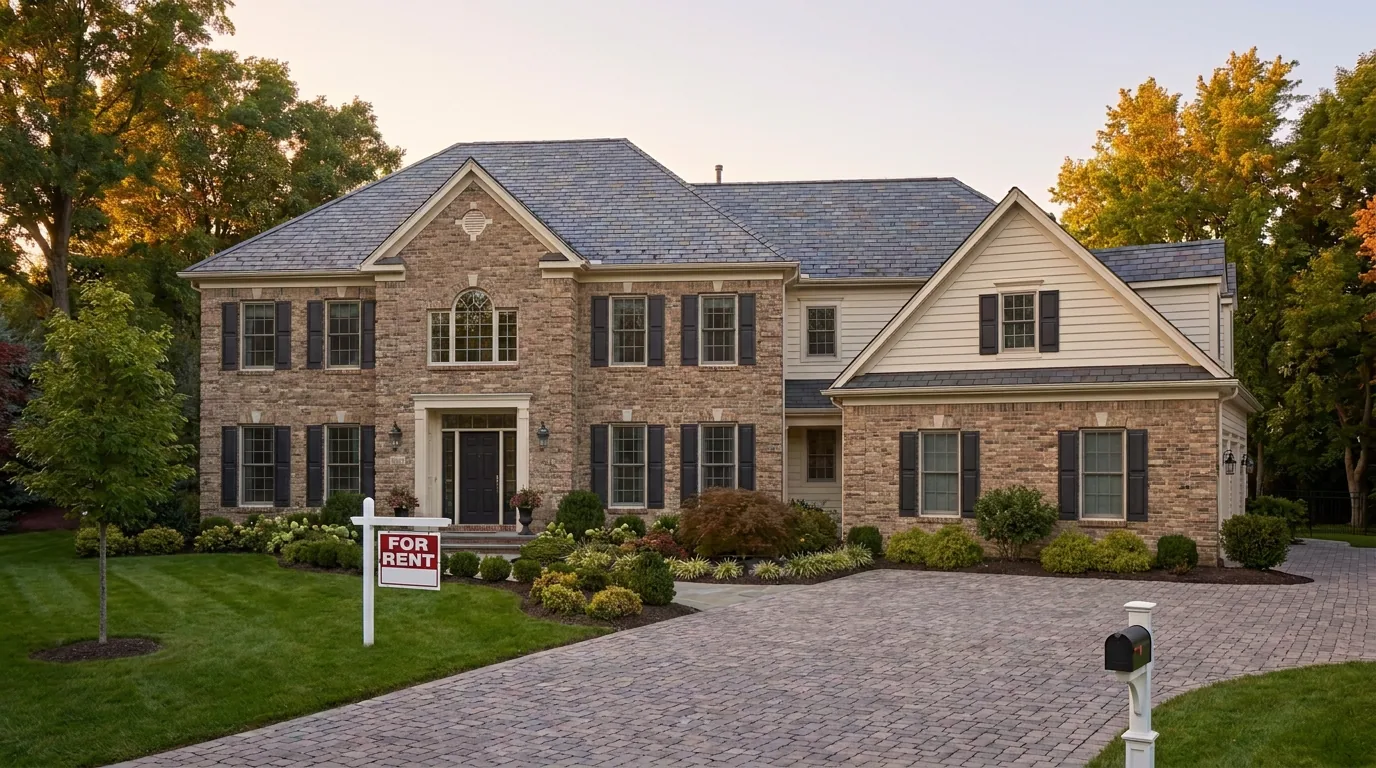
A stone and siding rental home with a For Rent sign in the front yard
Home / Landlord Insurance

Landlord insurance for the property you rent out.

A homeowners policy is written for a home you live in. Once a tenant moves in you need different coverage, or a claim can be denied on that basis alone.

DP-3
The Right Policy Form
Loss of Rent
Income While It Is Empty
30–60 Days
Vacancy Clause Window
20+
Carriers Compared
The Quick Answer

A Pennsylvania rental property needs a landlord policy, usually a DP-3 dwelling fire form, not a homeowners policy. It covers the building, your liability as an owner, and loss of rental income when a covered loss makes the unit unrentable. It does not cover a tenant's belongings, which is why requiring renters insurance in the lease is standard practice and legal in Pennsylvania, though it must be written into the lease to be enforceable. Watch the vacancy clause: most policies limit or suspend certain coverage once a property sits empty beyond 30 to 60 consecutive days. Short-term and vacation rentals are generally excluded and need an endorsement or a separate policy. Kleppinger Insurance in Bethlehem shops it across more than twenty carriers at (484) 357-1485.

Right policy form
DP-3 dwelling fire, not HO-3
Three core coverages
Dwelling · liability · loss of rents
Watch out for
Vacancy clause · short-term rental exclusion
Free quotes
(484) 357-1485
Pennsylvania Landlord Insurance, The Short Version

The day a tenant moves in, the policy has to change.

The most expensive mistake in rental property is also the most common: keeping the homeowners policy after the tenant moves in. A homeowners form is underwritten for an owner-occupied residence. Once the property is rented, the risk the carrier priced is not the risk they have, and a claim can be denied on that basis alone. Not reduced. Denied.

What you need instead is a landlord policy, most often a DP-3 dwelling fire form. It is built around three things a homeowners policy either handles differently or does not handle at all: the structure, your liability as an owner rather than as a resident, and loss of rental income when a covered loss puts the unit out of service. That third one is the coverage owners forget and miss the most, because the mortgage payment does not pause while the unit is being rebuilt.

Pennsylvania does not require landlords to carry insurance. Lenders do, on any mortgaged property, and the practical case is stronger than the legal one. The Landlord and Tenant Act of 1951 puts habitability obligations on you, Pennsylvania applies comparative negligence so a court can apportion fault, and a tenant injury claim against an uninsured owner reaches personal assets directly.

Two details catch people repeatedly. Vacancy clauses limit or suspend coverage once a property sits empty past a stated number of days, usually 30 or 60, which matters during turnover and renovation. And a short-term rental is a different animal entirely: most landlord policies exclude transient occupancy, and a platform's host protection is not a substitute for your own coverage.

We write single-family rentals, twins, duplexes and small multi-unit buildings across the Lehigh Valley and both states, and carrier appetite for older rental stock varies enormously, which is exactly what shopping twenty of them is for.
What a landlord policy covers. And the four things it does not.

Five core coverages, four endorsements worth having on Pennsylvania rental stock, and four gaps that surprise owners at the worst possible moment.

Core landlord coverage
Coverage A

Dwelling

The building itself, on a DP-3 written open-peril like a homeowners policy. Insure to reconstruction cost, not to what the property would sell for or what you paid, which matters especially on the older twins and row homes across Bethlehem, Allentown and Easton.

Core landlord coverage
Coverage B

Other Structures

Detached garages, sheds, fences and retaining walls. Usually set as a percentage of the dwelling limit, which is fine for a shed and thin for a detached two-car garage.

Core landlord coverage
Landlord-owned

Personal Property

Only what you own and keep at the property: appliances, a mower, tools, furnishings in a furnished rental. It is not the tenant’s belongings, and the limit is usually small by default, so a fully appliance-equipped unit deserves a look.

Core landlord coverage
The one owners forget

Loss of Rental Income

Pays the rent you would have collected while a covered loss makes the unit unrentable, commonly up to 12 months. The mortgage, taxes and insurance keep coming during a rebuild. This is the coverage that decides whether a fire is a hassle or a crisis.

Core landlord coverage
As an owner

Landlord Liability

Covers you when a tenant or guest is injured on the property and you are found responsible. Pennsylvania uses comparative negligence, so fault can be apportioned and you can still owe even when the injured party was partly at fault. Default limits are often lower than they should be.

Endorsement worth adding
Add it

Vacancy Endorsement

Most policies limit or suspend certain coverage, particularly vandalism and water damage, once the property has been vacant beyond roughly 30 to 60 consecutive days. If you are between tenants or mid-renovation, this is the endorsement that keeps you covered rather than technically insured.

Endorsement worth adding
Add it

Water Backup & Sump

Sewer and drain backup and sump pump overflow are excluded from the base policy, and a rental basement is exactly where this happens. Inexpensive, and the claim is common.

Endorsement worth adding
Add it

Ordinance & Law

On older rental stock, repairing a covered loss means meeting current building code. The base policy pays to restore what was there; this pays the difference. Frequently missing on rentals in pre-1950 housing.

Endorsement worth adding
Strongly recommended

Umbrella Liability

Adds a million dollars or more above the liability on your rentals, your home and your autos. For anyone with equity in rental property, this is the cheapest meaningful protection available, and it is the one landlords most often skip until after a claim.

Not covered as standard
Never covered

Tenant Belongings

Your policy covers the building, not their furniture, electronics or clothing. Tenants need their own renters insurance, which is legal to require in Pennsylvania but only enforceable if it is written into the lease.

Not covered as standard
Separate policy

Flood

Excluded from every landlord policy, exactly as with homeowners. Rising water from the Lehigh, the Monocacy or any creek requires a separate flood policy, and NFIP policies generally carry a 30-day waiting period.

Not covered as standard
Needs its own policy

Short-Term & Vacation Rentals

Most landlord policies exclude transient occupancy. Listing a unit on a short-term platform, whether in the Valley or up in the Poconos, generally requires an endorsement or a dedicated short-term rental policy. A platform’s host guarantee is not a substitute for your own coverage.

Not covered as standard
Not covered

Tenant Damage & Lost Rent from Non-Payment

Malicious damage by a tenant is sometimes addable by endorsement, but ordinary wear, neglect and a tenant who simply stops paying are not insurance losses. That is what security deposits, screening and the lease are for.

Renting out a place that is still on a homeowners policy?

It is the most common gap we find, and the most expensive one. Fixing it takes one call, and it is the difference between a paid claim and a denied one.

Where Pennsylvania Landlords Actually Get Caught

Three gaps that are not obvious until the claim.

The vacancy clause

Nearly every landlord policy contains one, and almost no owner reads it. Once a property has been vacant beyond a stated number of consecutive days, commonly 30 or 60, the policy limits or suspends certain coverages. Vandalism, glass breakage and water damage are the usual casualties, which is unfortunate, because those are precisely the losses an empty building attracts.

It bites in ordinary situations, not exotic ones: a turnover that takes longer than expected, a renovation between tenants, an eviction that drags, an inherited property waiting to be listed. The fix is simple and cheap, a vacancy permit or endorsement, but you have to ask for it before the window closes rather than after the copper is gone.

Short-term rentals are a different policy

If a unit goes onto a short-term platform, the exposure changes character. Occupancy turns over constantly, guests are not screened the way tenants are, and most standard landlord forms exclude transient occupancy outright. The Poconos are close enough that plenty of Valley owners have a second property in the short-term market, and the coverage question follows the property.

A platform's host protection program is not your insurance. It is a limited guarantee with its own conditions and exclusions, it does not replace liability coverage, and it will not satisfy a mortgage lender. Short-term operation generally needs an endorsement or a dedicated policy, and telling us about it up front costs nothing while discovering it at claim time costs everything.

Requiring renters insurance, and doing it properly

Your policy does not cover a tenant's belongings and never will. When a tenant's uninsured property is destroyed, or when their negligence causes damage that spreads to another unit, the claim lands on your policy and your loss history.

Requiring tenants to carry renters insurance is legal in Pennsylvania and increasingly standard, but the Landlord and Tenant Act does not impose it for you. It is only enforceable if it is written into the lease. Two refinements worth adding: ask to be named as an additional interest so you are notified if the policy lapses, and require proof at signing rather than trusting a promise. At roughly $15 to $30 a month, it is a small ask that materially reduces claims against your own policy.

Do you know what your vacancy clause actually says?

Fifteen minutes with your declarations page tells you the vacancy window, the loss of rents limit and whether short-term use is excluded. Free, and better to know now.

Eight ways to lower the cost of insuring a rental. Without creating a gap.

The biggest lever is which carrier writes it. The one place not to economize is liability, because that is the claim that reaches past the property and into everything else you own.

1

Let us run the whole panel

Carrier appetite for rentals varies far more than for owner-occupied homes, and it tightens further on older stock, multi-unit buildings and owners with a claim. The same duplex can be declined by one carrier and written normally by the next.

2

Put the rentals and your personal lines together

Many carriers discount a landlord policy when your home and auto sit with them too. It also means one team sees the whole picture, which matters when a claim touches more than one policy.

3

Raise the deductible on properties you can self-insure a little

Rental deductibles are often set at the same $500 or $1,000 as a personal home out of habit. If you own several properties, raising deductibles across the portfolio usually saves more than it risks.

4

Require renters insurance and enforce it

It reduces claims against your policy, gives you a path to recover when a tenant causes damage, and some carriers price better when it is a documented lease requirement. Get proof at signing.

5

Update the systems carriers rate on

Roof age, electrical service, plumbing and heating drive rental pricing the same way they drive homeowners pricing, and often harder. If you have replaced any of them and never told the carrier, you are paying for work already done.

6

Keep the occupancy story accurate

Owner-occupied, tenant-occupied, vacant, seasonal and short-term are five different risks and five different prices. Misstating it to save money is the fastest way to have a claim denied, and telling us the truth usually costs less than people expect.

7

Do not carry bare liability limits on a rental

This is the wrong place to economize. Pennsylvania comparative negligence means you can owe even when the tenant was partly at fault, and a serious injury claim reaches everything you own. Raise the underlying limits and add an umbrella.

8

Re-shop at renewal

Rental market appetite shifts constantly. The carrier that wanted your duplex three years ago may be non-renewing that class today. We re-shop so your rate does not drift and so a non-renewal notice is never the first you hear of it.

Whatever you are renting out. We quote it.

How a rental is occupied matters as much as what it is worth. Tell us the real situation and we will write it correctly the first time.

One door or a dozen, the review is free.

Tell us what you own and how it is rented. We will tell you what the policy should be, what it costs, and what is currently exposed.

Rental property insurance across the Lehigh Valley. And all of Pennsylvania and New Jersey.

Bethlehem, Allentown and Easton carry a deep stock of twins, row homes and small multi-unit buildings, and many Valley owners hold property on the New Jersey side as well. Being licensed in both states keeps one agency across the whole portfolio.

One local note: several Lehigh Valley municipalities require rental registration, licensing or periodic inspection. That is a borough or city matter rather than an insurance one, but it is worth confirming with your municipality before listing a unit.

Pennsylvania landlord insurance questions. Straight answers.

Do I really need landlord insurance, or is my homeowners policy enough?

You need a landlord policy. A homeowners form is underwritten for an owner-occupied residence, and once the property is tenant-occupied the carrier is insuring a risk it did not price. A claim can be denied on that basis alone.

Pennsylvania does not require landlord insurance by statute, but lenders require it on any mortgaged property, and the Landlord and Tenant Act of 1951 places habitability obligations on you that create real liability exposure.

What is a DP-3 and how is it different from an HO-3?

A DP-3 dwelling fire policy is the standard landlord form. Like an HO-3 it covers the structure on an open-peril basis, but it is built for a property you own rather than occupy: it adds loss of rental income, writes liability as an owner rather than a resident, and covers only landlord-owned personal property such as appliances and lawn equipment.

What it does not do is cover the tenant's belongings. That is what renters insurance is for.

What is loss of rents coverage?

It pays the rental income you would have collected while a covered loss makes the unit unrentable, commonly for up to 12 months. If a fire puts a duplex out of service for five months, this is what covers the rent you are not collecting while the mortgage, taxes and insurance keep coming due.

It is the coverage owners most often carry at too low a limit, because they insure the building carefully and treat the income as an afterthought.

What happens if my rental sits empty between tenants?

This is the vacancy clause, and it catches people constantly. Most landlord policies limit or suspend certain coverages once a property has been vacant beyond a stated number of consecutive days, commonly 30 or 60. Vandalism, glass and water damage are typically the first to go, which is unfortunate because those are exactly the losses an empty building attracts.

If a turnover, renovation, eviction or estate settlement is going to leave the unit empty, ask for a vacancy permit or endorsement beforehand. It is inexpensive, and it has to be arranged before the window closes.

Can I require my tenants to carry renters insurance?

Yes. It is legal in Pennsylvania and increasingly standard practice, but the Landlord and Tenant Act does not impose it for you, so it is only enforceable if it is written into the lease.

Two things make it work better: ask to be named as an additional interest so you are notified if the policy lapses, and require proof at signing rather than accepting a promise. At roughly $15 to $30 a month it is a small ask, and it meaningfully reduces claims that would otherwise land on your policy.

Am I covered if I list the property on Airbnb or VRBO?

Generally not. Most landlord policies exclude transient occupancy, and short-term operation is a materially different risk: constant turnover, unscreened guests and higher liability exposure.

A platform's host protection program is not a substitute for your own policy. It is a limited guarantee with its own exclusions, it does not replace liability coverage, and it will not satisfy a mortgage lender. Short-term rentals need an endorsement or a dedicated policy, so tell us before the first booking.

Does my policy cover damage caused by a tenant?

Sudden accidental damage from a covered peril is generally covered. Malicious damage by a tenant is sometimes available by endorsement and is worth asking about. What is never covered is ordinary wear and tear, neglect, or a tenant who simply stops paying rent.

Those are what screening, the security deposit and the lease exist to handle. Insurance covers sudden accidental loss, not the business risk of renting to people.

How much does landlord insurance cost compared to homeowners?

Typically somewhat more than a homeowners policy on the same building, because tenant-occupied property carries higher liability and claim frequency. The exact difference depends far more on the building's age, systems and location than on any rule of thumb.

The bigger variable is carrier selection. Appetite for rentals, older stock and multi-unit buildings varies enormously, and the spread between the best and worst quote on the same duplex can be substantial.

Do I need an umbrella policy on rental property?

If you own rentals, this is one of the strongest cases for one. Pennsylvania uses comparative negligence, so a court can apportion fault and you can still owe damages even when the injured party was partly responsible. A serious tenant or guest injury claim can exceed a standard liability limit quickly.

An umbrella adds a million dollars or more above your rental, home and auto liability for a few hundred dollars a year. It is the cheapest meaningful protection available to a property owner, and the one most commonly skipped until after a claim.

I own several rentals. Should they be on one policy?

Often, yes. Portfolio owners typically accumulate policies bought at different times through different agents, which produces mismatched limits, duplicated coverage and renewal dates scattered across the year.

Consolidating usually saves money, and it always makes claims simpler, because one team sees the whole picture. Above a certain size or unit count the right structure becomes a commercial package rather than individual dwelling policies, and we will tell you which side of that line you are on.

Still have questions? Call (484) 357-1485. We will give you a straight answer.

Call before the tenant moves in.
Not after the first claim.

Send us the address and the declarations page. We will confirm you are on the right form, check the vacancy and loss of rents language, and shop it across more than twenty carriers.