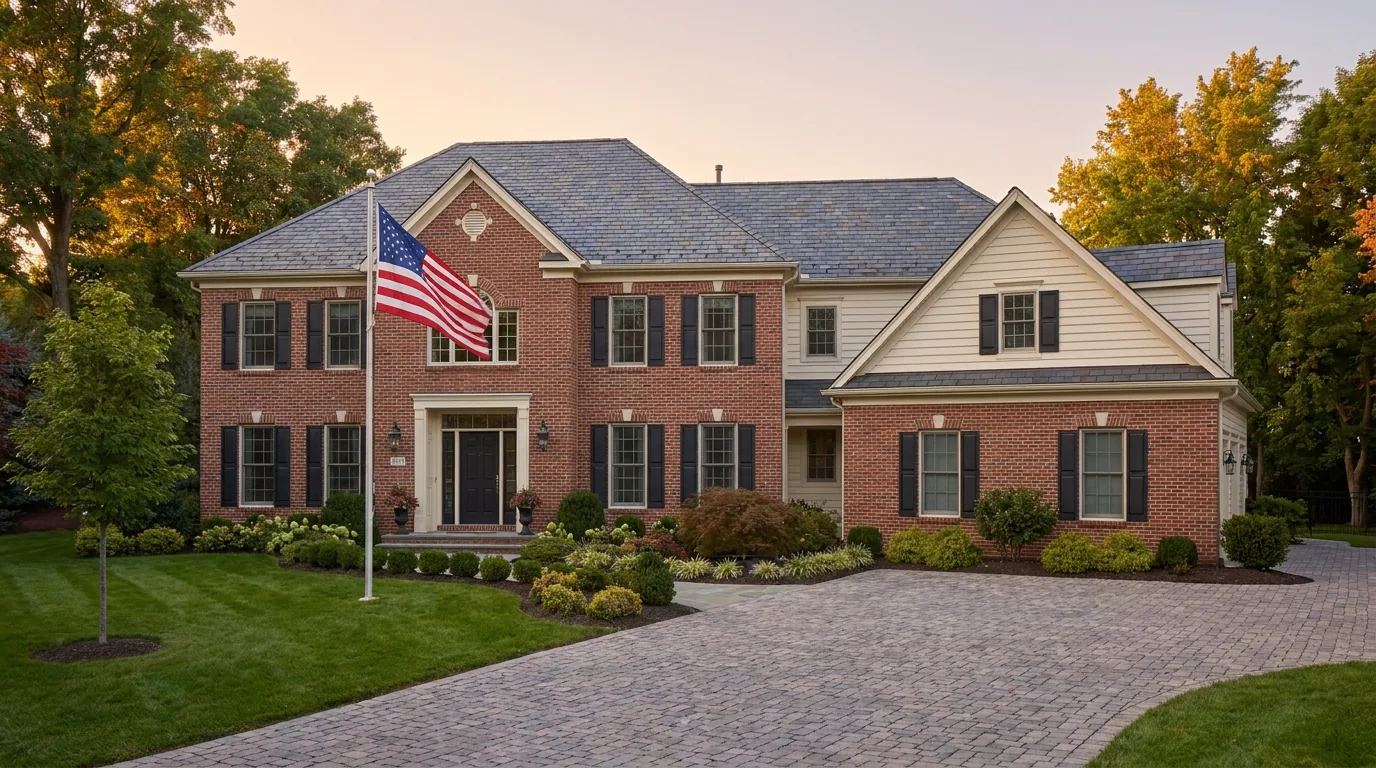
A brick colonial home with an American flag on a tree-lined Pennsylvania street
Home / Home Insurance

Pennsylvania home insurance, sized to rebuild.

Your policy should cover what it costs to rebuild your house today, not what it would sell for. On older Lehigh Valley homes those are very different numbers.

HO-3
Standard Policy Form
Rebuild
Cost, Not Market Value
Pre-1950
Housing We Know Well
20+
Carriers Compared
The Quick Answer

A standard Pennsylvania homeowners policy is an HO-3, and its most important number is the dwelling limit, which should track what it costs to rebuild your home today rather than what it would sell for. In much of Bethlehem, Allentown and Easton the housing stock predates 1950, so reconstruction frequently costs more than market value, and current building code will demand upgrades the original build never had, which is what ordinance and law coverage pays for. Three common losses are not covered without action: flood and mine subsidence require separate policies, and sewer or sump backup requires an endorsement. Kleppinger Insurance, an independent agency in Bethlehem, shops all of it across more than twenty carriers at (484) 357-1485.

Standard form
HO-3 · six coverages
Price the dwelling on
Reconstruction cost, not market value
Needs separate coverage
Flood, mine subsidence, water backup
Free quotes
(484) 357-1485
Pennsylvania Home Insurance, The Short Version

Insured to rebuild it. Not to resell it.

Almost every homeowners policy problem we find traces back to one line on the declarations page: the dwelling limit. People assume it should match what they paid, or what Zillow says, or what the mortgage is. It should match none of those. It should match the cost to reconstruct the house from the foundation up, at today's labor and material prices, in your town.

In the Lehigh Valley those numbers separate more than most places. A brick twin in south Bethlehem or a row home in Easton might sell for $250,000 and cost meaningfully more than that to rebuild with comparable materials, because you are paying for plaster, masonry, framing and finish work priced in 2026 rather than 1925. Insure to market value and you are underinsured before anything happens.

Older housing brings a second problem. When a claim gets repaired, current building code applies, and a standard policy pays to rebuild what was there, not what code now requires. Rewiring, a new panel, updated plumbing, structural bracing: that gap is what ordinance and law coverage exists to close, and it is routinely missing or set far too low on the policies we review.

Then there are the exclusions people meet at the worst moment. Flood is never covered by a homeowners policy. Sewer and sump backup is not covered without an endorsement. Mine subsidence is not covered and has its own state program. None of these are obscure, and all three show up in Pennsylvania basements.

So we start with the rebuild number, add the endorsements the house actually needs, then run the whole thing across more than twenty carriers, because appetite for older homes varies enormously between them. Want a ballpark first? Try the home rate estimator, then call for the real number.
What an HO-3 covers. And the four things it does not.

Six coverages come standard. The endorsements below are where most Pennsylvania policies are quietly thin, and the last four are the losses homeowners are most surprised to learn they are carrying themselves.

Included in an HO-3
Coverage A

Dwelling

The house itself, plus what is attached to it. This limit should equal reconstruction cost, not market value and not the mortgage balance. On older Lehigh Valley homes those numbers can be a long way apart, and getting this one wrong quietly undermines every other coverage on the policy.

Included in an HO-3
Coverage B

Other Structures

Detached garages, sheds, fences, and the driveway gate. Usually set automatically at ten percent of the dwelling limit, which is fine for a shed and nowhere near enough for a detached two-car garage or a barn.

Included in an HO-3
Coverage C

Personal Property

Everything inside. Standard policies settle a lot of it at actual cash value, meaning depreciated, unless you add replacement cost on contents. Jewelry, firearms, cameras and collectibles carry low internal sublimits and need to be scheduled separately to be fully covered.

Included in an HO-3
Coverage D

Loss of Use

Pays for somewhere to live while the house is repaired. On a serious claim in a tight rental market this is worth more than people expect, and it is one of the first limits we check on a policy that was written years ago.

Included in an HO-3
Coverage E

Personal Liability

Covers you if someone is injured on your property or you damage someone else’s. Most policies default to $100,000 or $300,000. If you own a home, an umbrella policy stacked on top is one of the cheapest meaningful protections available.

Included in an HO-3
Coverage F

Medical Payments

Small no-fault limit that pays a guest’s medical bills regardless of blame. It exists to settle minor incidents before they become liability claims, and it does that job well.

Endorsement worth adding
Add It

Ordinance & Law

The coverage older homes cannot do without. It pays the extra cost of meeting current building code during a repair, including electrical, plumbing and structural upgrades the original construction never had. Frequently missing or set far too low.

Endorsement worth adding
Add It

Water Backup & Sump

Sewer and drain backup and sump pump overflow are excluded from the base policy. The endorsement typically runs $40 to $160 a year with limits from $5,000 to $25,000. For a finished basement, we generally recommend $15,000 or more.

Endorsement worth adding
Add It

Service Line

Covers buried water, sewer, electrical and gas lines between the street and your house, which the base policy does not. On older streets with original laterals this is a small premium against a five-figure excavation.

Endorsement worth adding
Add It

Equipment Breakdown

Sudden mechanical or electrical failure of furnaces, boilers, water heaters, central air and major appliances. Inexpensive, and it covers a category most people assume is already included.

Not covered as standard
Separate Policy

Flood

Never covered by a homeowners policy, ever. Rising water from the Lehigh, the Monocacy, Saucon Creek or heavy surface runoff requires a separate flood policy through the NFIP or a private carrier, and NFIP policies typically carry a 30-day waiting period.

Not covered as standard
Separate Policy

Mine Subsidence

Damage from the collapse of abandoned underground coal and clay mines is excluded. Pennsylvania runs its own low-cost program through the Department of Environmental Protection, and eligibility extends across a large share of the state’s counties.

Not covered as standard
Not covered

Wear, Rot & Maintenance

Insurance pays for sudden accidental loss, not for age. A roof at the end of its life, gradual seepage, rot, mold from a long-running leak and pest damage are maintenance, and carriers are strict about the distinction.

Not covered as standard
Watch the form

Roof Settlement

Increasingly common and easy to miss: many carriers now settle older roofs at actual cash value on a depreciation schedule rather than replacement cost. Two policies at the same price can treat a hail-damaged 18-year-old roof completely differently.

Is your dwelling limit still the right number?

It is the single most common gap we find, and the easiest to fix before you need it. We will recalculate rebuild cost with you in about 15 minutes.

Coverage Basics

How a Pennsylvania homeowners policy actually works.

Replacement cost, actual cash value, and why the difference decides your claim

Two policies can carry identical limits and pay wildly different amounts, because of how they settle. Replacement cost pays what it takes to replace the item today. Actual cash value pays that minus depreciation. On a fifteen-year-old roof, that gap can be most of the claim.

Watch three places in particular. Contents often default to actual cash value unless replacement cost is added. Roofs increasingly carry their own depreciation schedule on older homes, even when the rest of the policy is replacement cost. And extended replacement cost, which pays a percentage above your dwelling limit when construction costs spike, is an option some carriers include and others charge for. We read all three lines before quoting.

Setting the dwelling limit on an older home

Reconstruction cost is not a guess and it is not the tax assessment. It is square footage, construction type, roof complexity, interior finish level and local labor rates. On pre-1950 Bethlehem and Easton housing it also means plaster instead of drywall, real masonry, and trim that no longer comes off a shelf.

Underinsuring has a second consequence people do not expect. Policies contain coinsurance-style provisions that can reduce even a small partial claim if the dwelling limit is well below reconstruction cost. You do not have to burn the house down to feel it, a kitchen fire will do.

The three water losses, and which policy pays for each

This is the single most misunderstood area in Pennsylvania property insurance, so plainly:

  • A pipe bursts inside the house. Covered by the standard policy. Sudden and accidental.
  • Water backs up through a sewer or drain, or the sump pump fails or overflows. Not covered without a water backup endorsement. This is the finished-basement claim, and it is common.
  • Water rises from outside, from a creek, a river or heavy surface runoff. That is flood, excluded entirely, and it needs a separate flood policy.

People routinely hold two policies and still collect nothing, because the loss fell in the one gap neither covers. Ten minutes with your declarations page prevents that.

What actually drives your premium here

Roof age and material first, then the electrical panel, the heating system, and plumbing type. Distance to a fire hydrant and to a staffed fire station matters more than most homeowners realize and is a real difference between a borough address and a rural one. Claims history matters, and so does credit, because Pennsylvania permits credit-based insurance scoring on property as well as auto.

Older systems are where carrier appetite diverges hardest. Knob-and-tube wiring, fuse boxes, older federal panels, oil tanks and original roofs will get a home declined outright by some carriers and quoted normally by others. That difference is not something you can shop from a comparison site, and it is the main reason an older Lehigh Valley home belongs with an independent agency rather than a direct writer.

Send us your declarations page. We will read it with you.

Dwelling limit, ordinance and law, roof settlement, water backup. We will flag what is exposed and what is fine, and quote the fix. No pressure either way.

The Lehigh Valley Housing Stock, Honestly

Insuring a house that was built before the code that now governs it.

Bethlehem, Allentown and Easton are full of homes built between 1890 and 1950, and a great many of them are excellent houses. They are also, from an underwriting standpoint, a completely different problem than a 2005 colonial in a development, and pretending otherwise is how people end up underinsured.

Rebuild cost outruns market value more often than not

In newer suburbs, land carries a large share of the price and the structure is comparatively cheap to reproduce. In older boroughs that flips. The lot may be modest and the building expensive: solid masonry, plaster walls, deep trim, stairs and millwork that have to be fabricated rather than ordered. A house that sells for $250,000 can carry a reconstruction cost well above that, and the sale price tells you almost nothing useful about the insurance number.

Code will demand things the original builder never did

Repair a significant loss and you are rebuilding to today's code, not 1926's. That can mean a new electrical service, updated plumbing, insulation, egress windows, or structural work. The base policy pays to restore what was there. Ordinance and law coverage pays the difference, and on an older home it is not an optional refinement, it is the coverage that makes the rest of the policy work.

Four systems decide who will write the house

Carrier appetite for older homes turns on a short list: roof age and material, the electrical panel and wiring, the heating system and any oil tank, and plumbing type. Knob-and-tube wiring and certain older panels are automatic declines at some companies and a normal quote at others. Same house, same day, completely different answers.

This is where being independent stops being a slogan. We know which of our carriers will look at a 1920s twin with an updated service and which will not bother, so we do not waste your week finding out one company at a time.

Two exclusions specific to Pennsylvania

Mine subsidence. Damage from the collapse of abandoned underground coal and clay mines is excluded from every standard homeowners policy. Pennsylvania runs its own low-cost program through the Department of Environmental Protection, covering a wide swath of the state's counties for a modest annual premium. Whether it applies to you is an address-level question worth asking rather than assuming.

Flood. Excluded outright. The Lehigh, the Monocacy and Saucon Creek are real, flood maps get redrawn, and a home does not have to sit in a mapped zone to take on water. Flood is written separately, and NFIP policies generally carry a 30-day waiting period, which means the time to ask is not when rain is in the forecast.

What to do with all of this

Send us the declarations page. In about fifteen minutes we can tell you whether your dwelling limit reflects reconstruction cost, whether you carry ordinance and law and at what percentage, how your roof would settle, whether backup coverage exists, and what the rest of the market would charge for the same house done properly.

Been declined on an older home before?

A decline from one carrier says nothing about the market. Roof age, wiring and panels are tripwires at some companies and routine at others. Let us find the ones that will write your house.

Eight honest ways to lower a Pennsylvania home premium. Without hollowing out the policy.

The biggest lever on an older home is which carrier writes it, not which discounts you stack. The one move to avoid is cutting the dwelling limit to hit a price.

1

Let us run the whole panel

Carrier appetite for older Pennsylvania homes varies more than for almost any other risk. The same 1930s twin can be declined by one company and written at a normal rate by the next. Shopping twenty carriers is not a pricing trick here, it is the difference between a policy and no policy.

2

Bundle home with auto

Usually the largest single discount on either policy, and it puts both renewals in one place. The honest caveat: it is not automatically cheapest, and sometimes the best home carrier and the best auto carrier are different companies. We check rather than assume.

3

Raise the deductible, then leave it alone

Moving from $500 to $1,000 or $2,500 cuts the premium meaningfully. The right number is the largest one you could write a check for tomorrow. Then stop filing small claims against it, because frequency costs more at renewal than the claim returns.

4

Update the systems carriers actually price on

A new roof, a modern electrical service, updated plumbing or a replaced heating system all move the rate, and on an older home they can move it a lot. If you have done any of this and never told your carrier, you are paying for work you already completed.

5

Ask about protective-device and mitigation credits

Central station alarms, monitored smoke and water-leak detectors, automatic water shutoffs and whole-house surge protection carry real credits at most carriers. Water sensors are the standout: cheap, and they cut the claim most likely to happen.

6

Mind your credit, because Pennsylvania allows it

Credit-based insurance scoring is permitted on property as well as auto here. Carriers weight it very differently, so improving credit is worth a re-shop rather than just a renewal.

7

Do not solve a premium problem by cutting the dwelling limit

The tempting move on an older home is to lower Coverage A until the price looks right. That is not saving money, it is buying a policy that will underpay exactly when you need it, and coinsurance provisions can shrink even small claims. Raise the deductible or change carriers instead.

8

Re-shop at renewal, not once a decade

Carriers change appetite constantly, particularly on older housing. The company that was cheapest three years ago may be the most expensive today, and loyalty is not rewarded the way people assume. We re-shop the book so your rate does not drift.

Whatever kind of house it is. We quote it.

Age, basement, outbuildings and how you use the property all change how a policy should be built. Tell us about the house and we will structure it right.

In escrow, or renewing soon?

Tell us the address and we will tell you what is available, what it costs, and what would make it cheaper. Straight answer, no obligation.

Homeowners insurance across the Lehigh Valley. And all of Pennsylvania and New Jersey.

Property rates turn on the address: the age of the housing around you, distance to a hydrant and to a staffed station, and the flood and subsidence picture underneath. Being licensed in both PA and NJ matters here, where households routinely own on both sides of the river.

Pennsylvania home insurance questions. Straight answers.

How much homeowners insurance do I need in Pennsylvania?

Enough to rebuild your home, not to rebuy it. Your dwelling limit should track reconstruction cost at today's labor and material prices, which has little to do with what you paid, what the mortgage is, or what a listing site estimates.

In older Lehigh Valley neighborhoods rebuild cost frequently exceeds market value, because plaster, masonry and custom millwork cost more to reproduce than a modern build. We run the reconstruction numbers with you before quoting.

Does homeowners insurance cover a flooded basement?

It depends entirely on where the water came from, and this is the most misunderstood question in Pennsylvania property insurance.

A burst pipe inside the house is covered. Sewer or drain backup and sump pump overflow are excluded unless you add a water backup endorsement, typically $40 to $160 a year for $5,000 to $25,000 of coverage. Rising water from outside is flood, excluded entirely, and needs a separate flood policy. Homeowners with a finished basement and no backup endorsement are carrying the most likely claim themselves.

What is ordinance and law coverage and do I need it?

It pays the additional cost of meeting current building code when repairing a covered loss. A standard policy pays to rebuild what was there; code may require a new electrical service, updated plumbing, insulation or structural work the original construction never had.

On any home built before roughly 1980, and certainly on pre-1950 Bethlehem and Easton housing, this is not an optional refinement. It is frequently missing or set at a token percentage on the policies we review.

Why was my older home declined by an insurance company?

Usually one of four things: roof age, knob-and-tube wiring or an outdated electrical panel, the heating system or an oil tank, or original plumbing. Carriers set their own appetite, and these are the tripwires.

A decline from one company says almost nothing about the market as a whole. We have carriers that will not look at a 1920s twin and carriers that write them routinely. That gap is the entire argument for using an independent agency on older housing.

Does my policy cover my roof at replacement cost?

Check, because increasingly the answer is no. Many carriers now settle older roofs at actual cash value on a depreciation schedule, even when the rest of the policy is replacement cost. On a 15-year-old roof, that can be most of the claim.

Two policies at the same premium can treat identical hail damage completely differently. It is one of the first lines we read on a declarations page.

Is mine subsidence covered by homeowners insurance in Pennsylvania?

No. Damage from the collapse of abandoned underground coal and clay mines is excluded from every standard homeowners policy. Pennsylvania runs its own program through the Department of Environmental Protection, and coverage is inexpensive relative to the exposure.

Eligibility is address-specific and extends across a large share of Pennsylvania counties. It is worth asking rather than assuming, particularly on older properties.

Will my premium go up if I file a small claim?

Often, yes, and by more than the claim was worth. Carriers price on claim frequency as much as severity, and a couple of small claims can affect your rate for years or make you harder to place at renewal.

The practical rule: set a deductible you can genuinely absorb, then use the policy for losses that matter. Call us before filing if you are unsure. That conversation is free and it has saved clients real money.

Does Pennsylvania use credit to price home insurance?

Yes. Pennsylvania permits credit-based insurance scoring on property policies as well as auto. It is not identical to a credit score, but it moves with the same inputs, and carriers weight it very differently from one another.

If your credit has improved meaningfully, that is a reason to re-shop rather than simply renew.

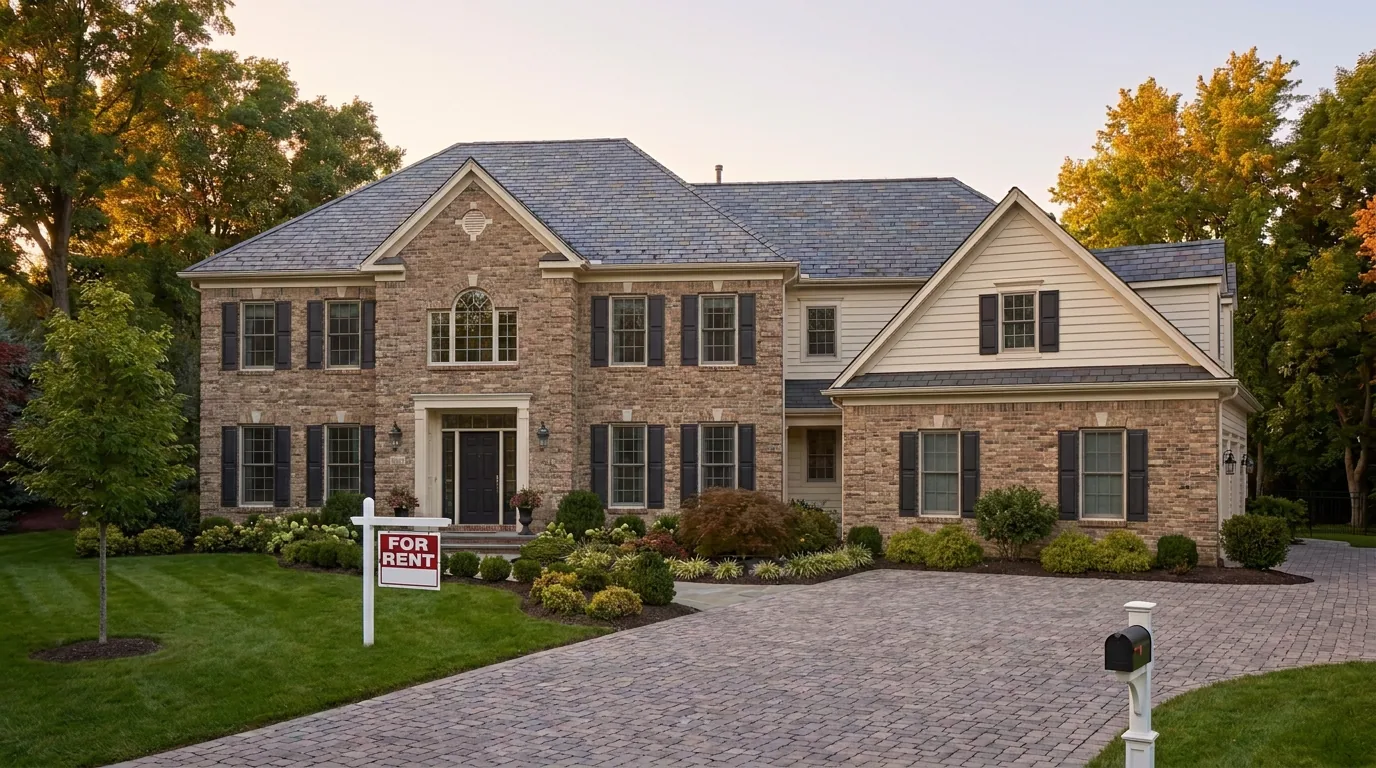
What happens to my coverage if I rent the house out?

A homeowners policy is written for a home you live in. Once it becomes a rental, the form no longer matches the risk and a claim can be denied on that basis alone.

You need a landlord policy, which covers the dwelling, your liability as an owner, and lost rental income. Call before the tenant moves in, because that is the moment coverage needs to change.

Do I need an umbrella policy?

If you own a home in Pennsylvania, probably. An umbrella adds a million dollars or more of liability protection on top of the limits in your home and auto policies, usually for a few hundred dollars a year.

It is the most protection per dollar available anywhere in personal insurance, and it becomes more compelling the more equity and savings you have to lose. We quote it alongside the home whenever it makes sense.

Still have questions? Call (484) 357-1485. We will give you a straight answer.

Send us the declarations page.
We will read it with you.

Fifteen minutes tells you whether your dwelling limit reflects reconstruction cost, whether ordinance and law is there, how your roof would settle, and what the rest of the market would charge.